











 |
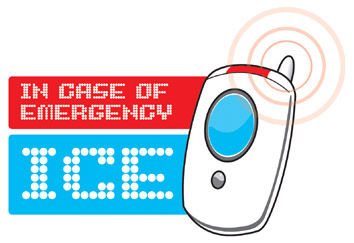
IN CASE OF EMERGENCY information to put in your cell phone |
One of the difficulties long faced by emergency services personnel is how to locate next of kin for a victim who is unconscious or otherwise unable to respond to questions. Even if the victim is carrying one or more forms of identification which have remained with him (such as a driver's license), those items don't necessarily provide information about where and how relatives or other interested parties can be reached, resulting in delays as officials try to track those people down through ancillary details.
This issue has been addressed through a variety of means over the years, as many people have taken to carrying lists of emergency contacts (and vital medical details) in their purses and wallets, or wearing items such as bracelets and necklaces with such information engraved on them.
Over the past several years an effort has been underway to get people to store "In Case of Emergency" (ICE) information in items that have become ubiquitous in many parts of the world: cell phones.
The scheme proposes that people enter ICE information into the address books of their cell phones, whence it can be retrieved by emergency workers. Some newer cellphones even have "ICE" buttons pre-programmed into them.
Take the time to enter the contact information of people that you would like contacted "In Case of Emergency" in your cell phone. List them as "ICE - Linda Smith," or "ICE - Joe Jones," and emergency workers can use that information as a tool to contact the people you have determined a priority.
